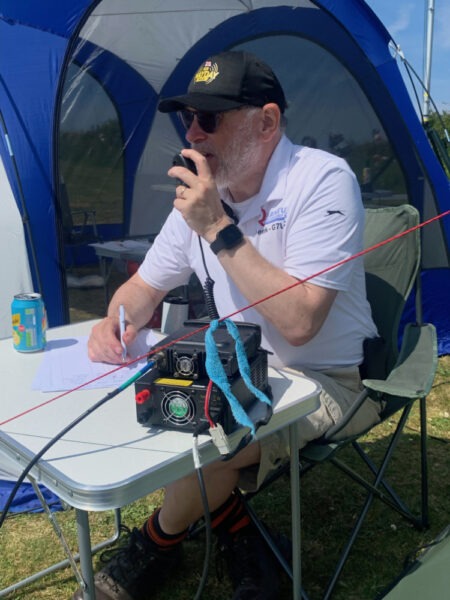
SOS Radio Week 2026 raises awareness of the work these volunteers and you, your club, or group of friends can help to spread the word of what they do near and far. All you need to do is register to take part on the SOS Radio Week website and inform them of the callsign you will be using and where your station will be located.
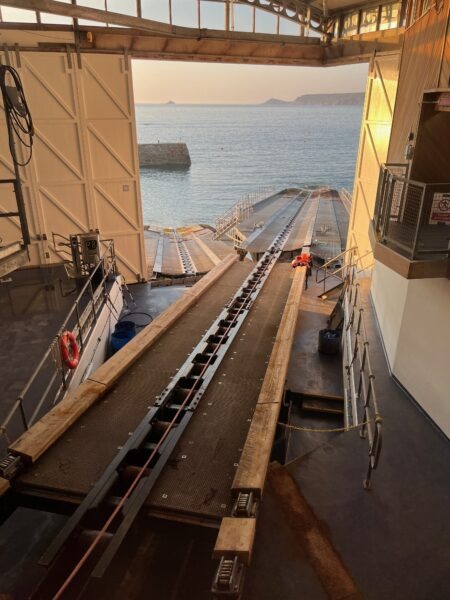
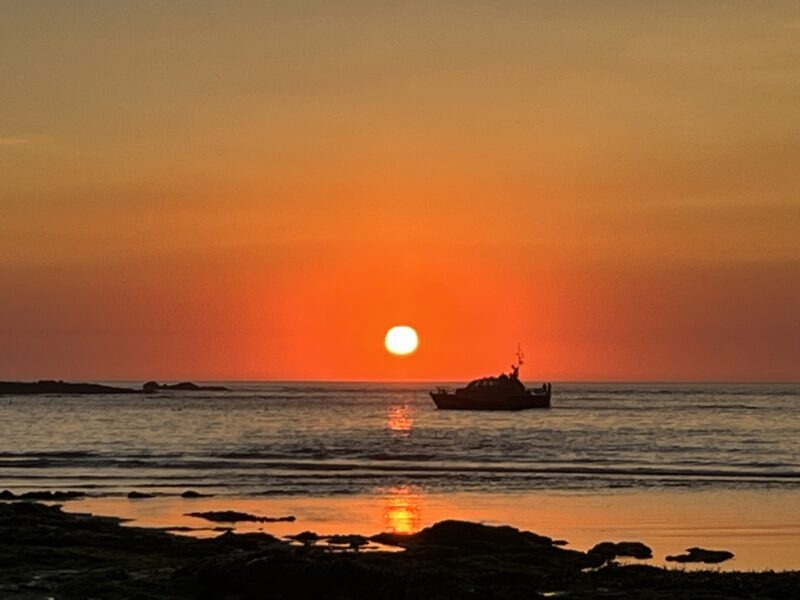
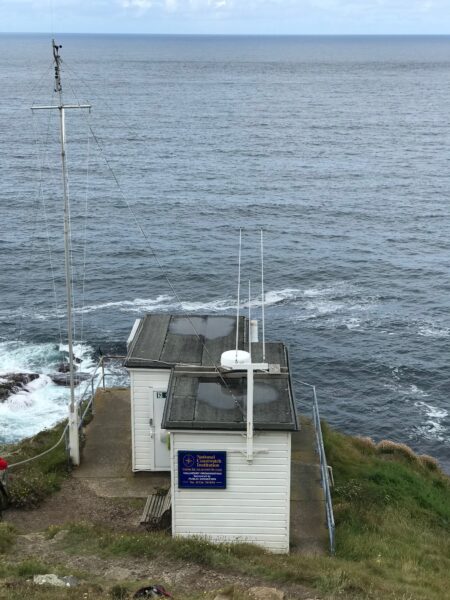
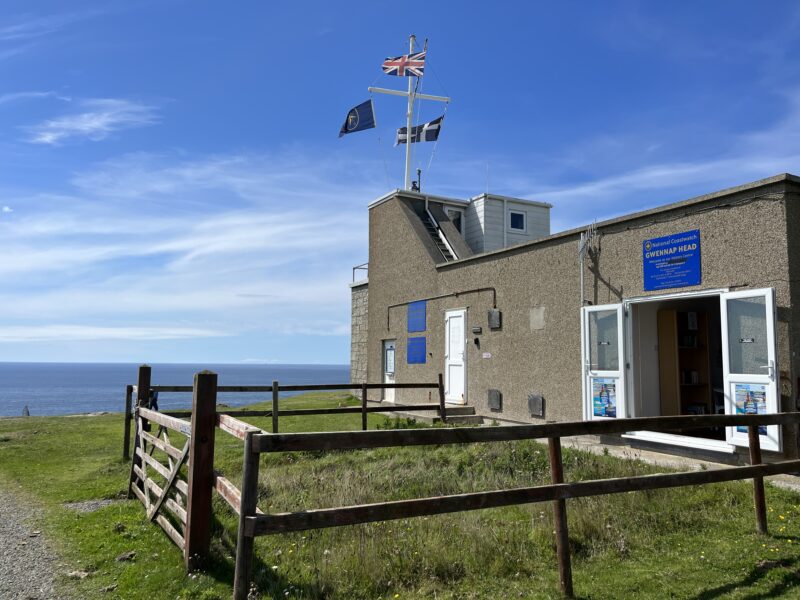
RNLI Sennen Lifeboat StationRNLI Sennen LifeboatNCI Lookout at Cape CornwallNCI Lookout at Gwennap HeadOperating GB8SOS on Shell Island
Registered stations can operate from anywhere; home, at a public location, or from a lifeboat, coast watch, or rescue station (with the station’s permission). They can use any callsign they like; personal, club, or special event. Furthermore, they can operate for as much of the event as suits them; be it a few hours a day, a whole day, or as much as they can for there entirety of the event. Details of registered stations and their operating patterns during the event will be posted on the SOS Radio Week website for chasers’ information.
The purpose of the event is to publicise the work of the volunteers, so there aren’t any restrictions on the modes that can be used; registered stations can use CW, analogue or digital voice, or any digital data mode. Operating through repeaters and Internet gateways is perfectly fine too. The event starts at 00:00 hrs UTC on the 1st May and finishes at 23:59 UTC on the 31st May.
SOS Radio Week promotes coastal volunteers
Discover more about the coastal volunteers that SOS Radio Week champions.
RNLI - 200 this year
The RNLI was founded in 1824 by Sir William Hillary who saw lots of ships wrecked near his home in Douglas on the Isle of Man. He was involved saving the lives that were at risk of perishing along the coast, but had a vision of a nationwide lifesaving organisation that would do the same for all seafarers.
Today, the RNLI operates a 24 hour rescue service every day of the year. They make no charge to those that are rescued and receives no money from the government. The whole operation is funded by members of the public and companies making voluntary donations. The money raised funds 448 lifeboats and hovercrafts, and 238 lifeboat stations around the coasts of England, Wales, Scotland, Northern Ireland, Ireland, the Isle of Man and the Channel Islands. Over 5,700 unpaid volunteer crew members are the backbone of the service, without whom there would fewer people rescued and saved around our coasts.
The volunteers of the RNLI risk their lives to save others. They go out in dreadful seas without fear for their own lives. This is non better demonstrated by the loss of the Penlee Lifeboat, and all its crew, in 1981 whilst attempting a rescue in hurricane force winds. Lifeboat crews are real heroes.
NCI
The government-funded HM Coastguard used to operate lookout stations around our treacherous coasts, keeping an eye out for anybody at risk; either on land, or out at sea. They would report their findings to the main Coastguard station and they would, in turn, co-ordinate a rescue with the help of their own Coastguard rescue teams, the RNLI and independent lifeboat and coastal rescue teams in the vicinity.
These lookouts were closed down in 1984 in an effort to save money, but it wasn’t long before two fishermen were lost, close to a Coastguard lookout that had recently shut. The first NCI station opened soon after at Bass Point, on the Lizard in Cornwall. Today, volunteers keep a visual watch from 58 NCI stations around the coastline of England Wales. They restored a service that had been in operation since 1822 and NCI watchkeepers are back on the frontline keeping us all safe as we walk, swim and sail.
NILA
Lifeboats were established around our coasts long before the formation of the RNLI. Many believe that Grace Darling was right at the start of the lifeboat movement, but her famous rescue of the Forfarshire’s crew, whilst she was living at a lighthouse, didn’t take place until 1838; 14 years after the founding of the RNLI. People had been forming themselves in to local life saving groups long before then. As long ago as 1785 the world’s first ‘unsinkable’ was developed and used as a lifeboat, whilst 1790 saw the purpose built lifeguard built.
Today, many local organisations still exist, outside of the RNLI, whose sole goal is to save lives along the local coasts and out to sea. Manned by volunteers, funded from voluntary donations and possessing the same selfless determination to help others – these folks are no less heroes than their RNLI bretheren and do an equally amazing job.
Coastal Rescue Teams
HM Coastguard has a volunteer arm that can often be found scrambling cliffs rescuing folk and animals and performing afloat rescues in the nooks and crannies that form our rugged coastline. In addition, there are many other independent life-saving teams that can be found performing the same role with equal professionalism.
This website uses cookies to improve your experience. We'll assume you're ok with this, but you can opt-out if you wish.AcceptRejectRead More
Privacy & Cookies Policy
Privacy Overview
This website uses cookies to improve your experience while you navigate through the website. Out of these, the cookies that are categorized as necessary are stored on your browser as they are essential for the working of basic functionalities of the website. We also use third-party cookies that help us analyze and understand how you use this website. These cookies will be stored in your browser only with your consent. You also have the option to opt-out of these cookies. But opting out of some of these cookies may affect your browsing experience.
Necessary cookies are absolutely essential for the website to function properly. This category only includes cookies that ensures basic functionalities and security features of the website. These cookies do not store any personal information.
Any cookies that may not be particularly necessary for the website to function and is used specifically to collect user personal data via analytics, ads, other embedded contents are termed as non-necessary cookies. It is mandatory to procure user consent prior to running these cookies on your website.