
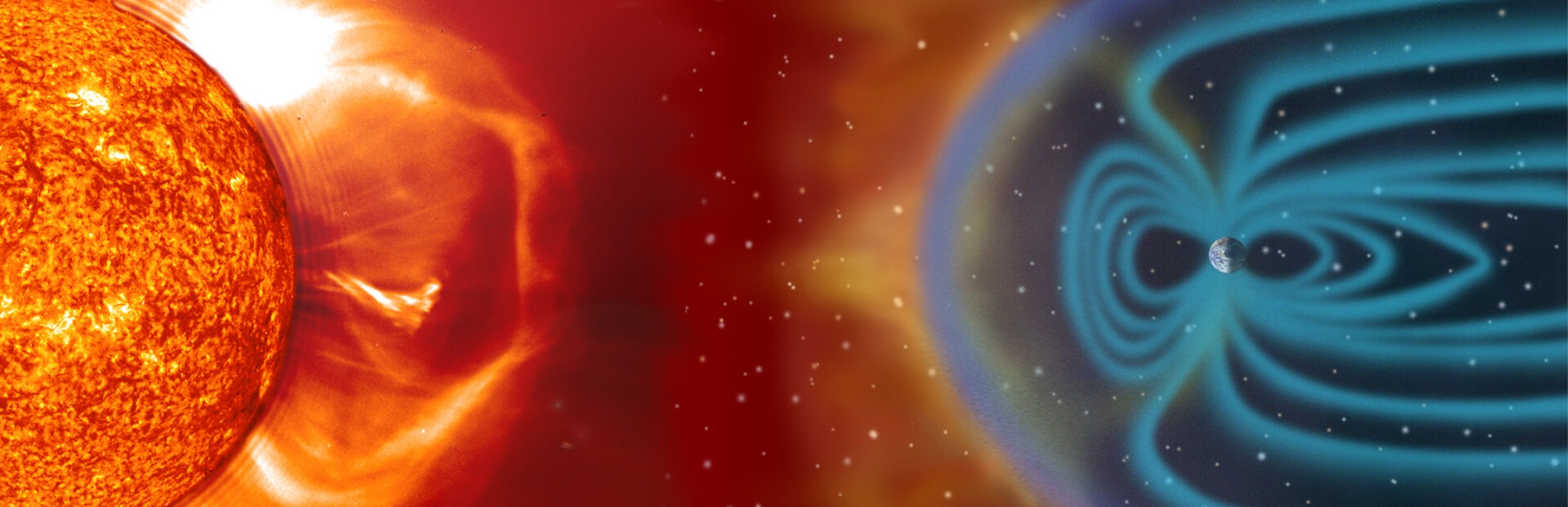
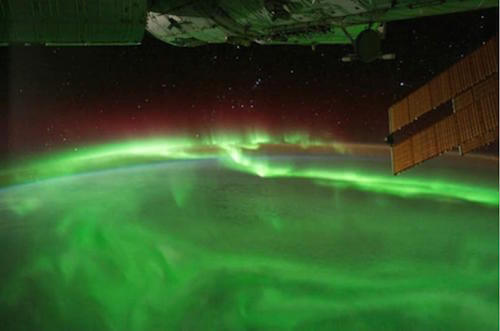
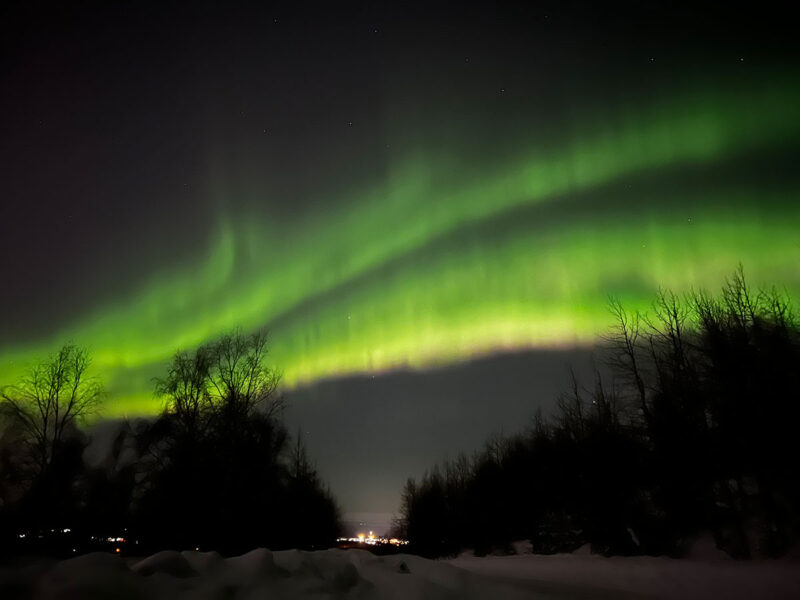
The sun’s 11-year solar affects us here on earth. As the sun gets more active, we see more auroras – those brightly coloured lights focused down/up from the poles. 2023 has be a particularly good year for spotting auroras, especially at lower latitudes – they’ve been see as far sought as Cornwall this year.
What are aurora’s?
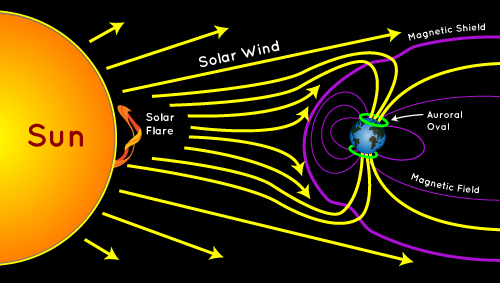
Aurora’s are caused by the sun ‘burping out a huge bubble of electrified gas that can travel through space at high speeds’, to quote NASA. This electrified gas is known as a Coronal Mass Ejection. As the CME approaches earth the energy and small particles contained within the ‘bubble’ start to travel down the magnetic field lines at the poles into Earth’s atmosphere. They, in turn, interact with various gases causing the dancing lights we see in the sky.
What’s the correlation with HF radio propagation?
But CMEs don’t only cause auroras, they affect HF propagation for radio amateurs and other users of the HF spectrum. They can decrease the maximum usable frequency (MUF) and increase the lowest usable frequency (LUF) so much that they can cause partial, or complete, radio blackouts on the HF bands. However, with the increased activity comes more ionisation of the earth’s ionosphere resulting in higher MUFs and periods of enhanced propagation.
So high activity levels on the sun are a two-edged sword for radio amateurs – a mixture of reduced propagation when we are in the path of CMEs and enhanced propagation at other times. Of course, as the sun quietens down and becomes less active, we suffer less from the effects of CMEs, but conversely there are lower levels of ionisation. So whilst we don’t suffer radio blackouts, MUFs are lower and amazing contacts on milliwatts of power are fewer.
Solar Cycle 25
This cycle of low sun activity, high activity, low activity lasts, about eleven years, though the length of cycles can vary. The amount of activity on the sun can also vary. Solar Cycle 24 was not a particularly active cycle, so we did not benefit so much from the enhanced propagation that the additional ionisation brings. Solar Cycle 25 was originally predicted by many authorities on the subject to be even worse than the previous one, but it quickly became evident that wasn’t to be the case. The amount of activity on the sun increased at quite ab rapid pace once it started and the heart of many a radio amateur was lifted with the prospect of some great contacts in to rare corners of the earth.
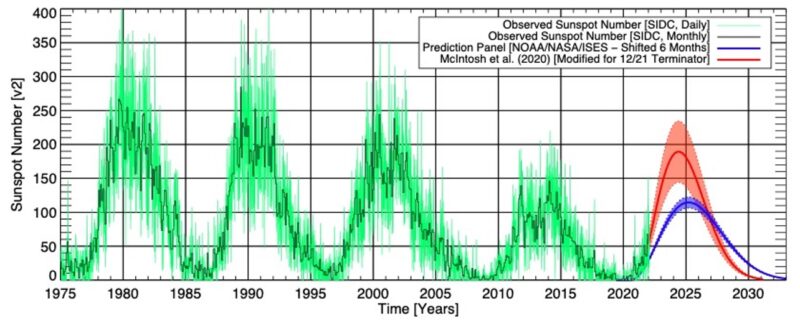
According to Spaceweather.com, NOAA, the US’ National Oceanic and Atmospheric Administration, has been studying the current solar cycle and has released its latest prediction as to how it will pan out. They are now predicting that the peak activity will be stronger than originally thought (though it already is) and peak earlier in the cycle than expected. It could occur as early as January 2024, but definitely by the following October. This would result in this solar cycle being about as strong as Solar Cycle 23, itself one of the top five cycles since 1900. Of course, what happens after that is open to anyone’s prediction. Will the activity taper off more slowly than it grew (more usual), drop like the proverbial brick, or what? Could this be a short solar cycle compared to the eleven year average?
It’s not an exact science predicting solar cycles as those that attempted to predict this cycle early proved – most were wrong.
Image copyright
ESA – European Space Agency –