

Reborn? Maybe not in its exact name, but an old favourite amateur radio data mode is about to make a comeback in the North West of England courtesy of the North West Packet Group. The staple communication method of radio amateurs before the Internet became a ‘thing’, packet radio was almost every computer lover’s area of experimentation during the 1980s and early 1990s.
What is Packet Radio?
Large wireless networks were established which enabled radio amateurs to send messages to each other anywhere in the world. Messages would be routed from the sender’s local computer to their local node over RF, and then over the RF network, bouncing from node to node, before arriving at the target’s registered node.
Alternatively, the network could be used for public knowledge sharing, discussion and even the sharing of some quite large files. This was through the use of Bulletin Boards – the text equivalent of the graphical Internet that was still to become the defect standard for communication and knowledge sharing.
High speed data – for the day
Packet radio was very versatile. Communication speeds were a joke compared to today’s connection rates of up to 1Gbit per second. At 1200 bits per second you would struggle to send anything at all these days over the Internet, but back in those days that was a huge improvement over the 300 bits per second we had started with. But as technology progressed so did the speeds, until we maxed out at a blistering 9600 bits per second.
Packet radio operators were also very patient in those days. We are now very used to sending an email containing a photograph and having its arrive quicker than it has taken to type this sentence. Back then we could wait several hours for messages and traverse the wireless networks, but it didn’t matter. Radio amateurs had their own communication network and they were proud of it.
Retro is in – North West Packet Group reigniting the passion for packet
So it’s slow, it’s limited in what you can do with it compared to the Internet today; why bother to rejuvenate it? It’s a dinosaur surely! Well ‘retro’ is the in-word these days and a little bit of nostalgia is good for the soul – it makes you appreciate what you have now. It also reminds us how inventive we are as radio amateurs.
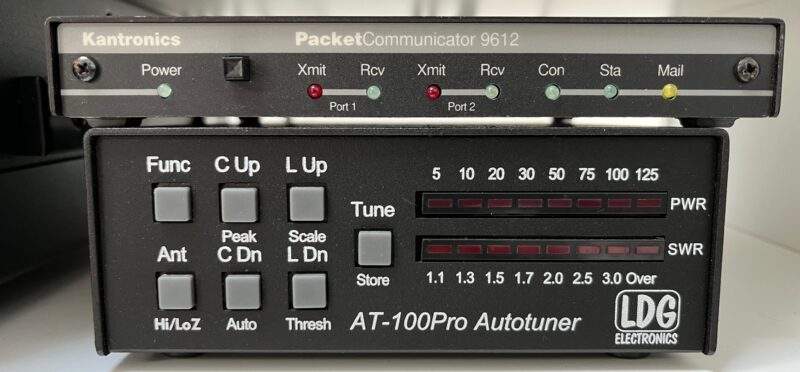
There’s lots of radio amateurs scrabbling around their lofts about now trying to find out where they put their TNCs (Terminal Node Controllers – aka modems), books and, for some, those old ’86 processor powered computers. The interest in the North West Packet Group’s endeavours has been very encouraging.
The days of LURPAC (Lancaster University Radio Packet Group) are not going to return any time soon, but a few radios amateurs are going to have some fun. Who knows, someone might pick up development of the system and advance it a little further.
Packet radio doesn’t need retro kit
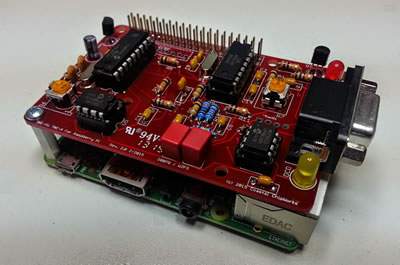
And don’t think that because this all took place before you were born, or you’ve not got any retro kit lying around, that you can’t take part. Almost any system that is capable of communicating wirelessly using modern sound card modems will be capable of operating packet radio. So if you missed it the first time around, here’s an opportunity to get involved in Packet Radio 2.0 and have some fun learning a new communication skill.
APRS – modern-day Packet Radio
Oh, before we conclude … packet radio never went away, it adapted and morphed into something else. Folk started to use packet radio to broadcast their location, speed, weather details etc. Those packets of data that we hear chirping out at around 144.800MHz these days is called APRS (Automatic Packet Reporting System). Yep, it’s not the Amateur Position Reporting System as some people refer to it; it’s packet. And if you decode the data using packet radio software, you will see the information being transmitted in its raw text state as ‘packets’ of data.
Keeping up-to-date with the North West Packet Radio Group
So, how do we get involved in the rejuvenation of packet radio by the North West Packet Radio Group? Well first off you can join the North West Packet Group on Facebook, or link to their forthcoming website (there’s nothing to see yet, but that’s the address). There you’ll be able to chat with all sorts of folk who were into packet, those that are desperately seeking to locate their old kit, purchase new secondhand retro kit, and find out what all the buzz is about.
Secondly, we can all get on the air and relive the glory days of digital data on 2m. Crumbs, next month somebody will be sending SSTV (Slow Scan Television) images over the 2m band using FM. Now where is my Kenwood TH-D7E and VC-H1 Visual Communicator? It’s around here somewhere.
Further reading
TNC-PI – yep, you guessed it; a packet radio TNC for the Raspberry Pi.
Packet radio TNCs still available – other dealers and TNC manufacturers are available.
Kantronics – a major player in packet radio for many years.