
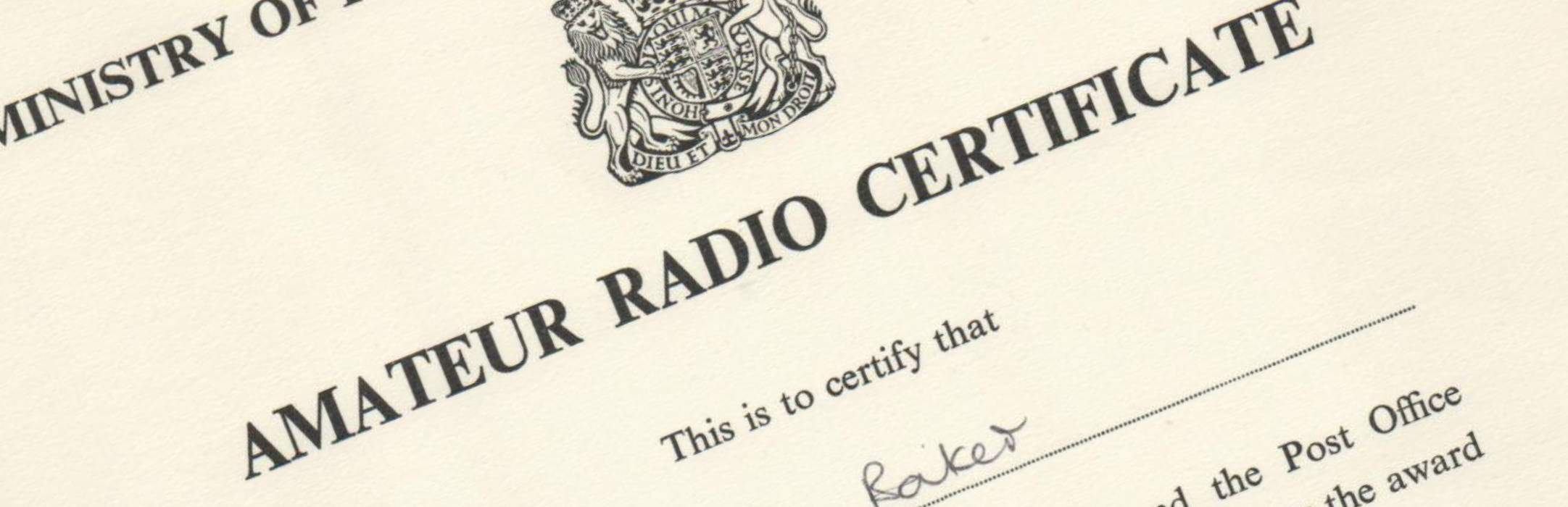
Earlier this week Quantum Technology Club member Trevor passed a memorable milestone – fifty years ago he gained his class A amateur radio callsign, G4CLE.
Mr Morse
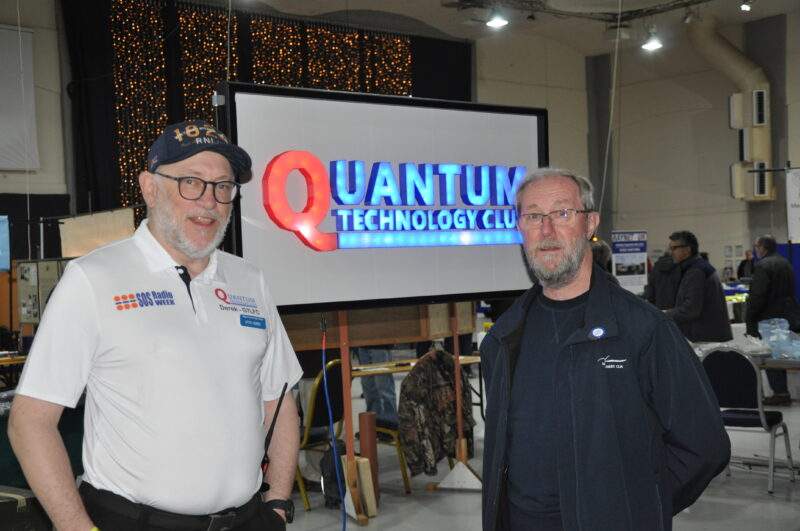
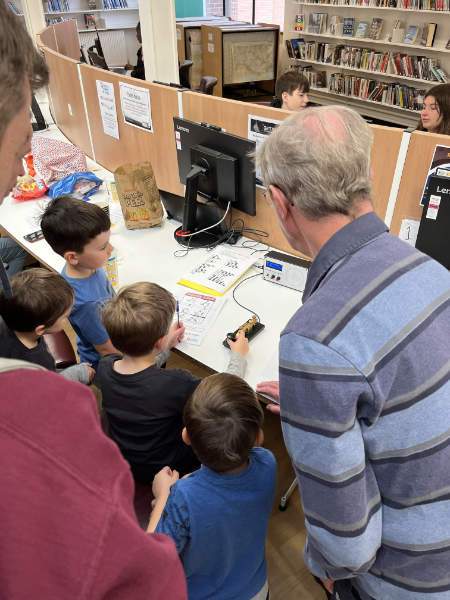
Trevor, also known amongst club members as Mr Morse, is a strong ambassador for the use of Morse Code. He is very active helping those who want to learn the art of ‘the key’ holding regular support sessions at both Quantum and the Leyland and District Amateur Radio (LADAR) group.

Quantum Technology Club
Starting early
He received his first piece of radio equipment at the age of 16. The Eddystone 840A was built in Birmingham, not far from where Trevor was born and lived. This now highly collectable shortwave receiver spurred Trev on to obtain his amateur radio licence so that he too could become one of those he had been listening to.
G8FHS on the air
Passing his RAE (Radio Amateur Examination) on the 3rd September 1971, Trevor started his amateur radio ‘career’ on 2m AM. His original callsign was G8FHS.
Amateur radio in the early seventies was very different to today:
- The RAE was the equivalent of today’s full licence exam. However, unless you had passed your Morse proficiency test, you could only operate on 2m and above. You also couldn’t use Morse Code.
- The exam was only run twice a year and at an official educational establishment.
- Those who passed were awarded an industry recognised qualification from City & Guilds.
- 6m and 4m were not amateur radio bands.
- The most common mode of operation on 2m was AM.
- RTTY (Radio Teletype) was the only digital mode available.
- Callsigns were allocated, you couldn’t choose your own.
- The class B licence was considered second class. Even the GPO’s (General Post Office’s) own ‘How to Become a Radio Amateur‘ pamphlet from the time stated that the class A licence was the ‘principle type of amateur transmitting licence’.
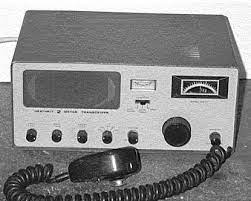
Trevor recalls, “Most rigs were crystal controlled on transmit and tunable on receive – so it was usual to call CQ and finish with ‘tuning high to low for a call’.” His first rig was a Murphy, converted for use on the amateur bands from its original intended use. But his first ‘proper’ rig was a Heathkit HW17A which he still has to this day. This was coupled to a Teletype 19 RTTY machine, interfaced to the radio with a home-brew (self-made) terminal unit.
G4CLE on the air
On the 29th August 1973 Trevor received his new class A callsign having taken his Morse test and passed. This required sending 36 words (average 5 letters per word) in three minutes with a maximum of four corrected errors and ten groups on numbers in one-and-a-half minutes with a maximum of two corrected errors. The tests were repeated for receiving. Any uncorrected errors meant you’d failed and would have to re-sit.
Now with a licence that enabled him to transmit on the HF bands Trevor obtained a Yaesu FTdx560. Trevor recalls that it “… was a lovely rig”, and that “you had to be careful as it only had a 30% duty cycle (listen for twice as long as your transmission), so you had to be quick tuning up – the driver and the PA had to be tuned up separately“. Sadly the radio died on him and he passed it on to someone else which he sorely regrets.
Happy 50th Trevor
Trevor stopped operating around the mid-1980s, but rejoined the hobby in 1999 – just in time for the new millennium. He now lives with us up here in Lancashire with his lovely wife Ann.
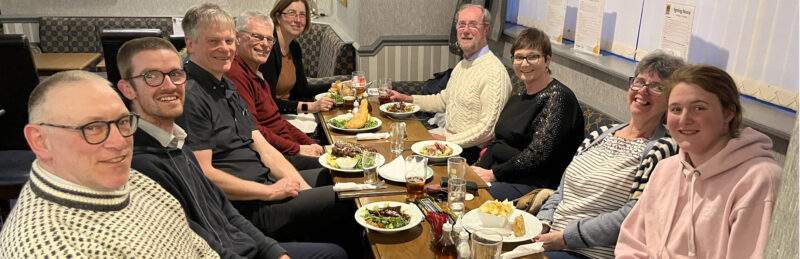
Congratulations on passing this significant milestone Trevor and we hope there are many more to come for G4CLE.