
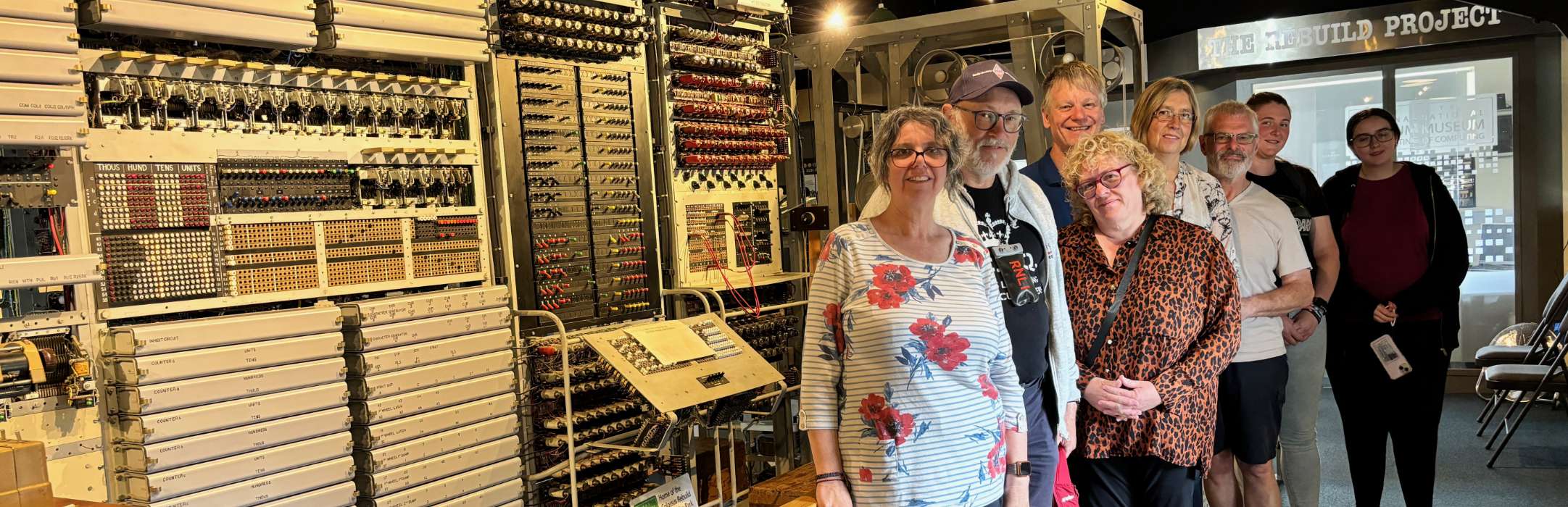
The first day of our weekend visit to Bletchley Park saw us visit the Bletchley Park Museum itself. It’s a great venue for learning what went on at BP, but we’re a club of techies and wanted to see technology in action, and talk to people about it to gain a greater understanding of how it worked. So on the second day, we were in search of working Tunnies, Robinsons and Collossus at the National Museum of Computing (NMOC). These were the machines used to crack the cipher settings used by the German High Command on their more sophisticated Lorenz machines – an altogether more daunting task than breaking the cipher settings of Enigma.
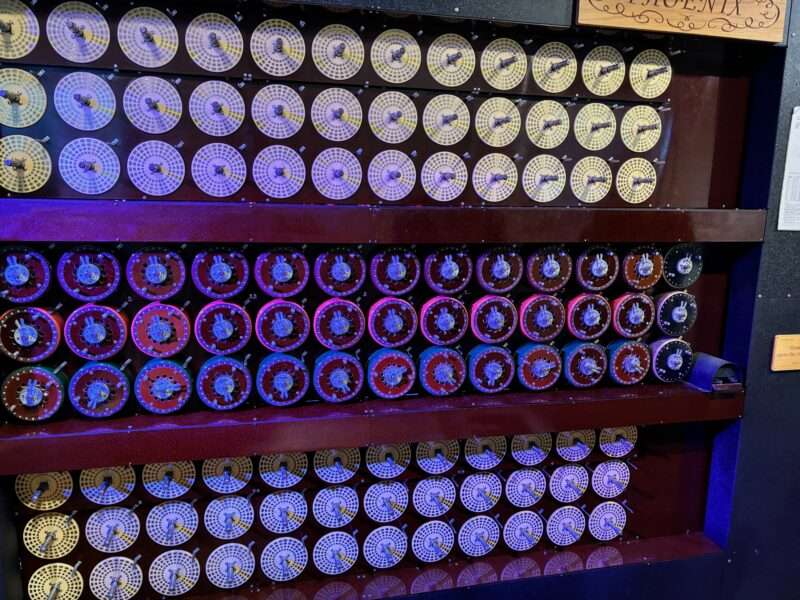
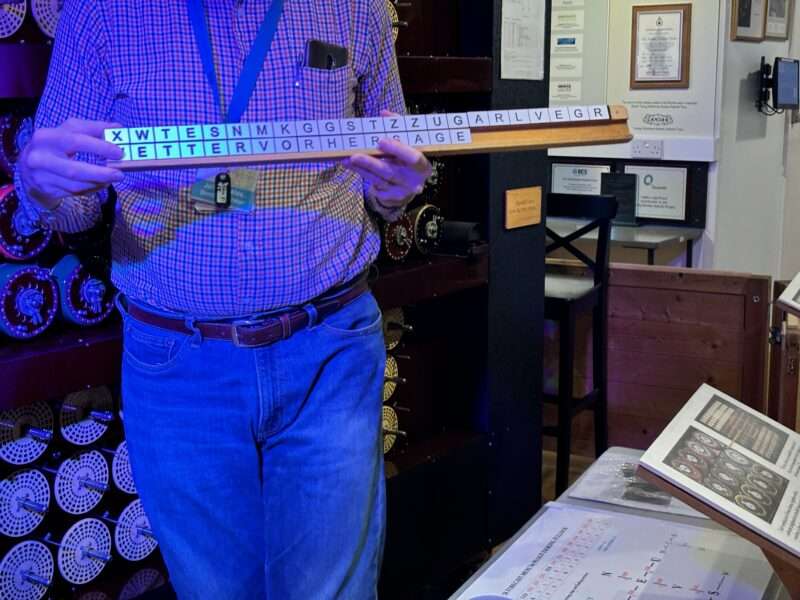
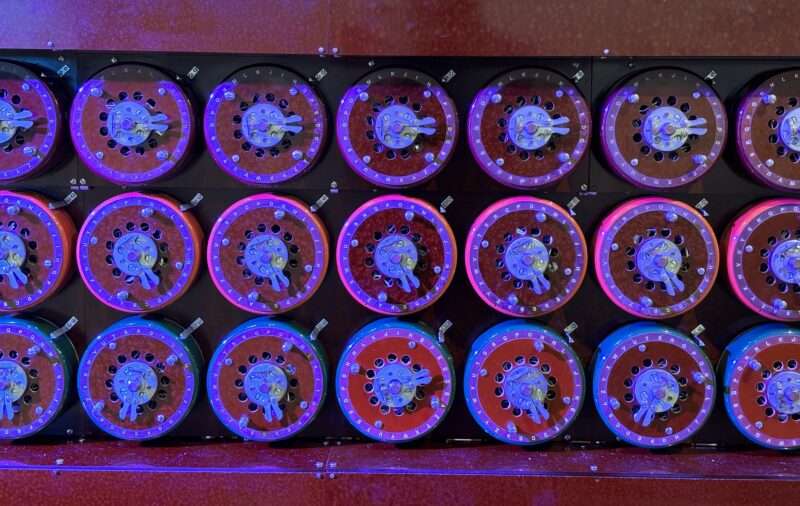
The Bombe was the complicated electro-mechanical machine that Turing and Welchman developed to help crack the Enigma settings each day. More than 220 Bombes were eventually built, each one containing the equivalent of 36 Enigma machines. This enabled lots of different settings to be cracked simultaneously, or more ‘processing’ power to be directed towards one particular set of settings.

After the war all the Bombes were all destroyed in the interests of national security. Nobody knew of their existence outside of those that worked on them until the mid-seventies when details slowly started to trickle out. However, it wasn’t until Welchman published his controversial book, Hut 6, in 1982 that interest really started to peak.
1994 saw a plan hatch to build a fully working replica Bombe. Thirteen years later the Bombe we see today at the National Museum of Computing was completed. This was a massive achievement given the limited amount of information available about it, and its construction, given that all documentation had been ordered to be destroyed too.
This modern, but faithful, replica is the only working Bombe in the world, and it is used to demonstrate how it worked and was operated every day. The demonstration we received was excellent and the technical subject matter easily understood by all.
Like the Bombe, all existence of the Tunnies, Robinsons and Colossus were ordered to be erased from history after the war. This despite their continued use by intelligence agencies through to the sixties to read the signals of Eastern European countries; the Russians had swept up all the Lorenz machines discovered as they advanced through Eastern Europe, unaware that the Allies were able to crack the ciphers used by them.
The reconstruction of a Colossus mk2 was started in 1983 and completed in 2008. The team responsible for it had to dig deep for technical information as that had been destroyed alongside the computers themselves immediately after the war; individual notes from engineers who worked on them was just one of the sources used to plan the reconstruction.
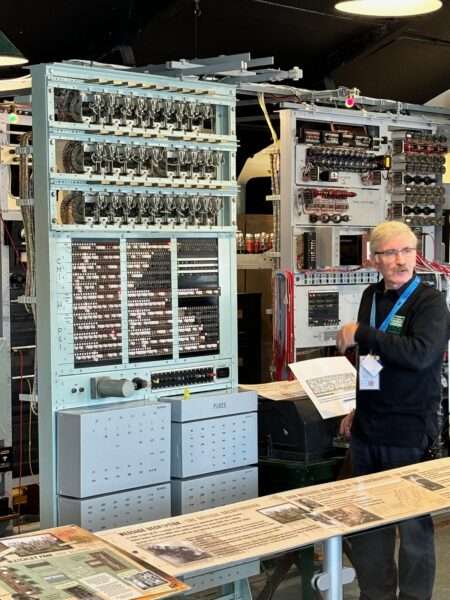
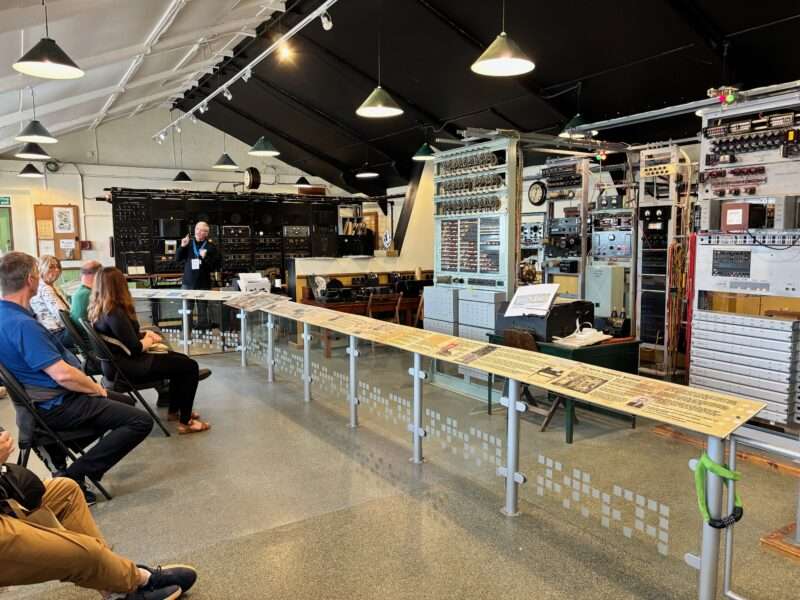

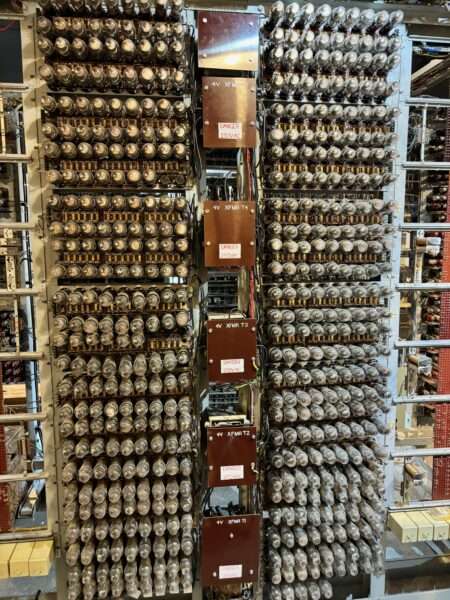
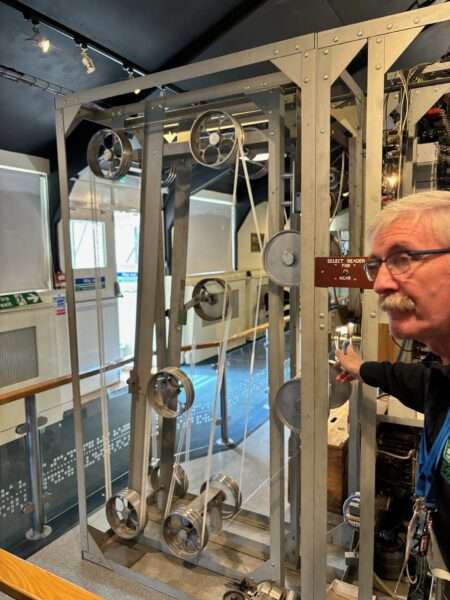
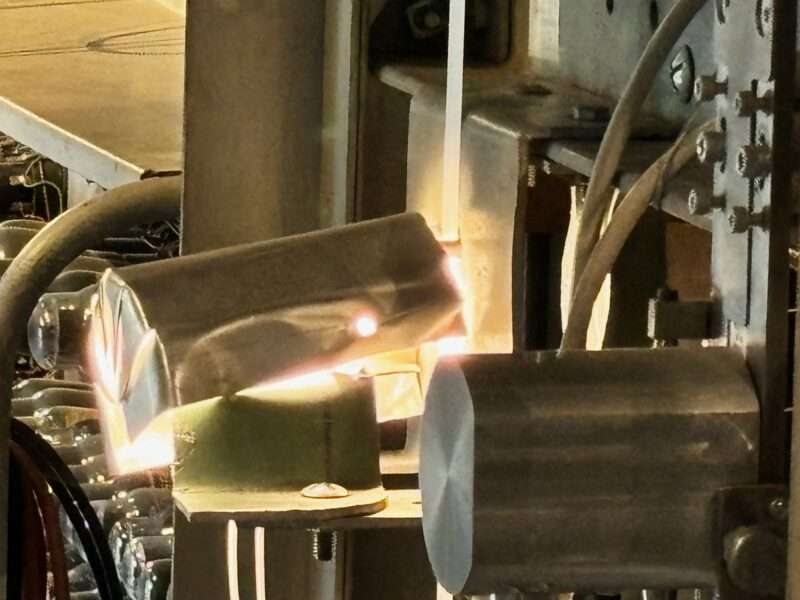
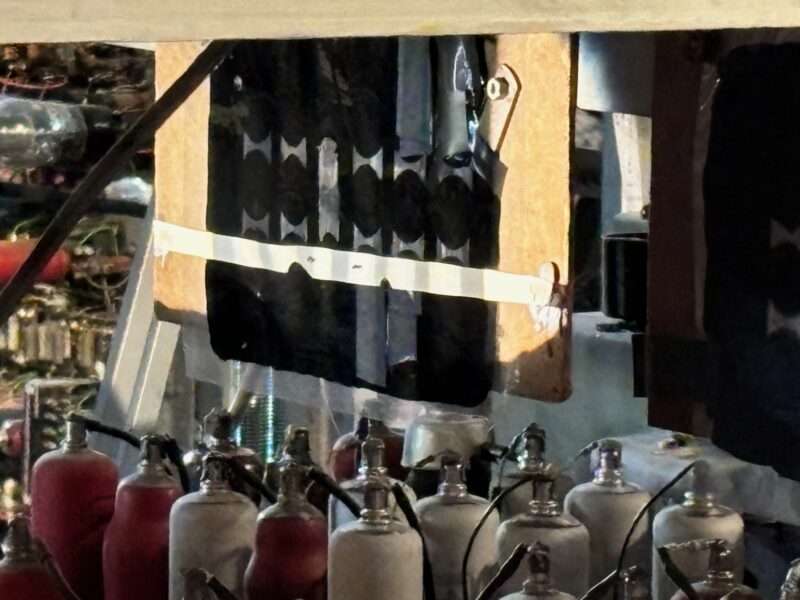
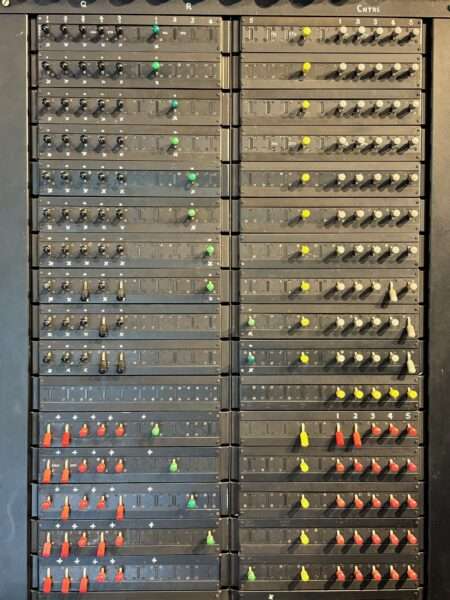
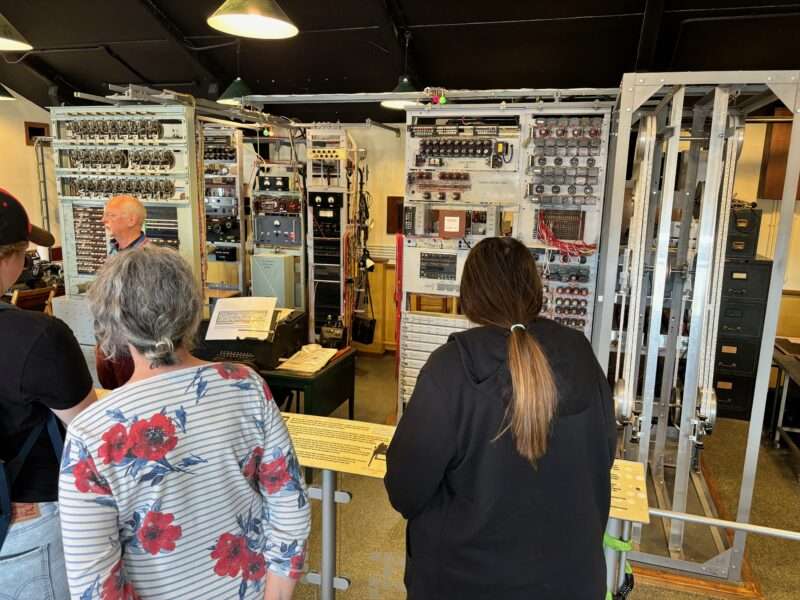
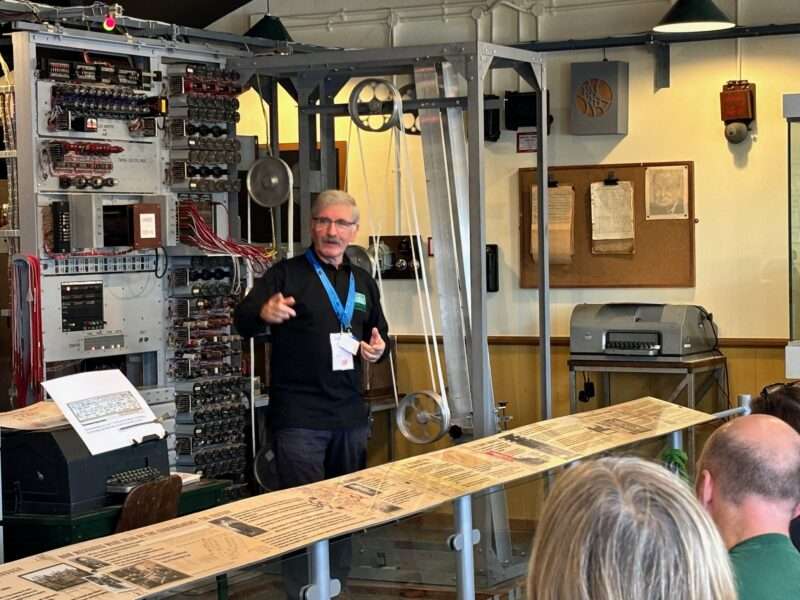

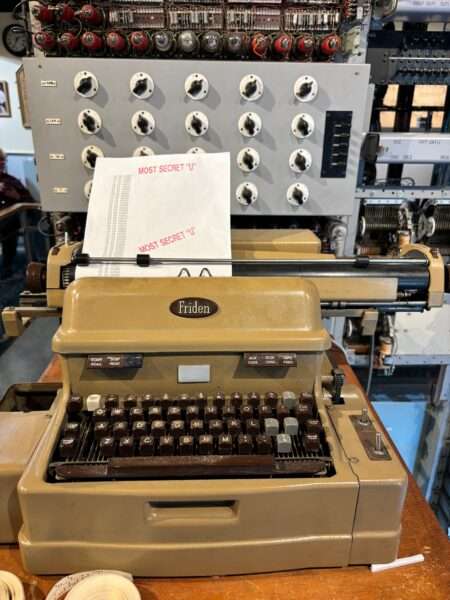
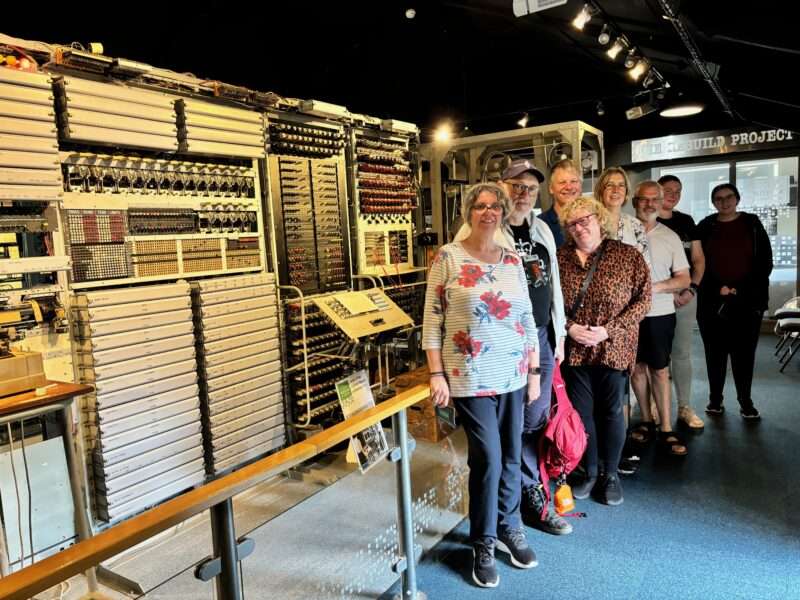
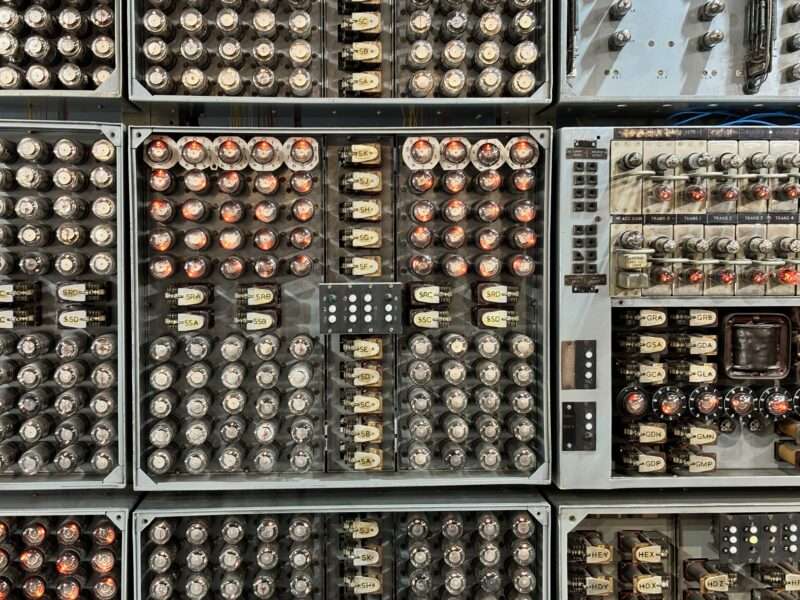
An authentic test of the finished product was performed in 2007. A Lorenz encrypted message was transmitted from a radio station in Germany, received in Britain and successfully processed by the Colossus. Unfortunately, a radio amateur in Germany who had programmed his laptop to crack the Lorenz cipher, performed the task in little over a minute, significantly beating Colossus. But then, his computer was about 240 times faster than Colossus – progress is progress, but it didn’t look as impressive as the valve driven replica.
The rebuilt Colossus, alongside a working Tunny and Robinson, now sits proudly in the National Museum of Computing, cracking Lorenz ciphers every day. The very knowledgable guides were extremely enthusiastic and very good at breaking down, what are very complex subject matters. There was plenty of opportunities to ask more probing questions to help you get a better understanding.
As the war ended, the staff of BP packed up and went home, never to speak of, or be recognised for, their activities at BP for another thirty, or so, years. However, the technological achievements of BP lived on and the staff were able to practise their new found skills ‘in the wild’.
The first electronic computer, having been developed at BP, started its further development after the war, firstly into a research tool and then a commercial tool that could be put to all sorts of uses; from accounting to simulation.
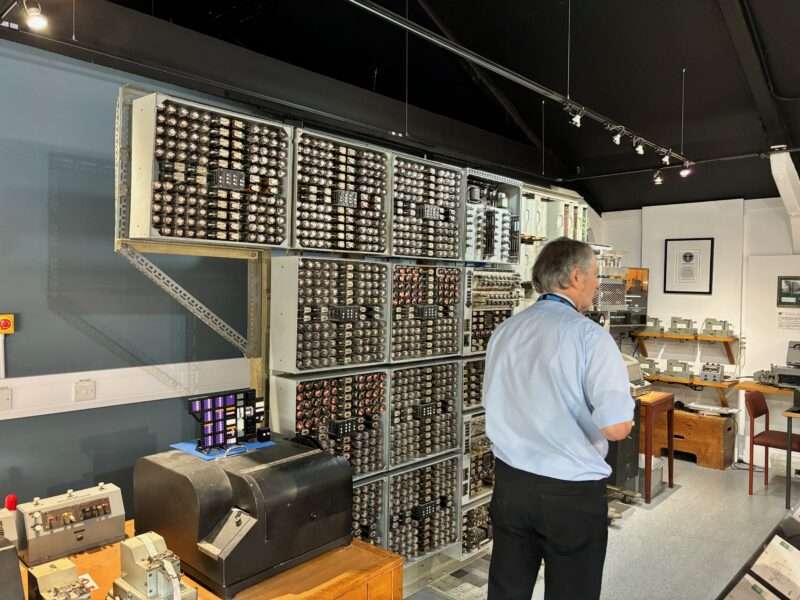
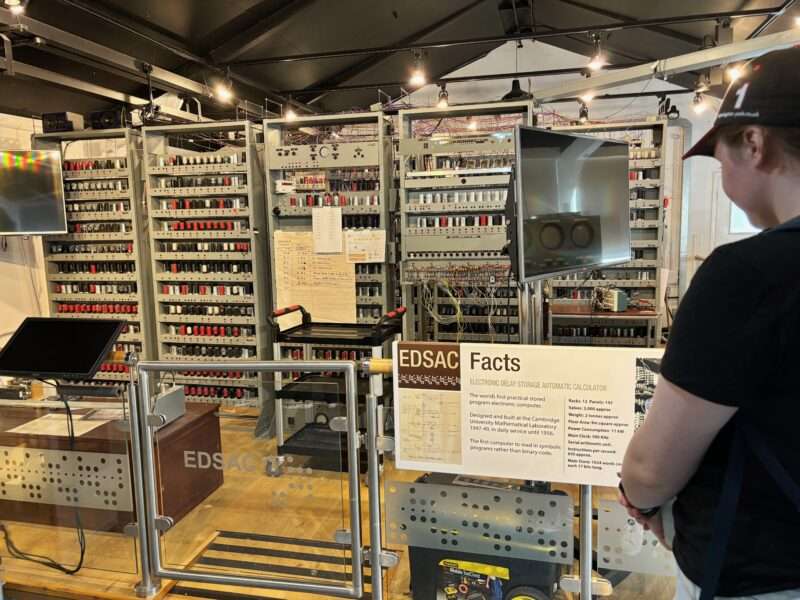
On-site is the world’s oldest working computer, the Harwell Dekatron, also known as the WITCH . It was built before the advent of semiconductors (transistors and chips/integrated circuits) and used dekatrons, glass counting tubes, to store data. Rather than being a binary computer that uses just ones and zeros to represent data, this was a decimal computer that used values zero to nine. It had the equivalent of around 350 of today’s bytes of storage and every day takes around six hours to calculate the value of Pi to six decimal places. Using glass valves, you can actually see data being moved around within the computer’s architecture and actually read the values being stored.
As time progressed, so did the early computing technology. The experimental computers gave way to ‘mass’ produced offerings that began to standardise specifications, peripherals and languages used; at least amongst a particular brand’s own computers if not across the whole industry. The likes of Elliot, IBM and ICL became big names in the industry, and sales of computers started to grow. These companies started producing what were known as mainframe computers, centralised computers that can run applications like accounting systems, simulations, etc. All of the processing is done centrally, all the storage is held centrally.
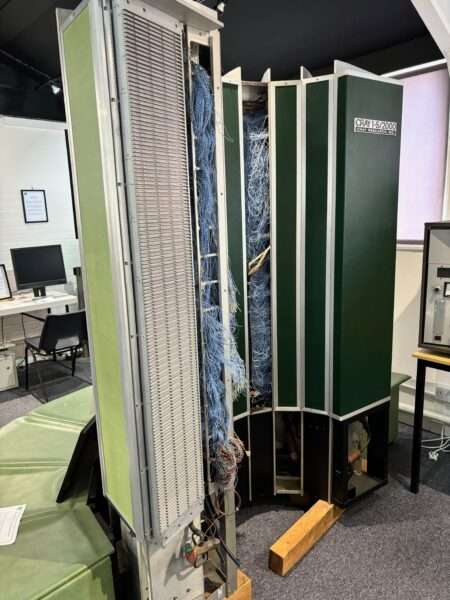
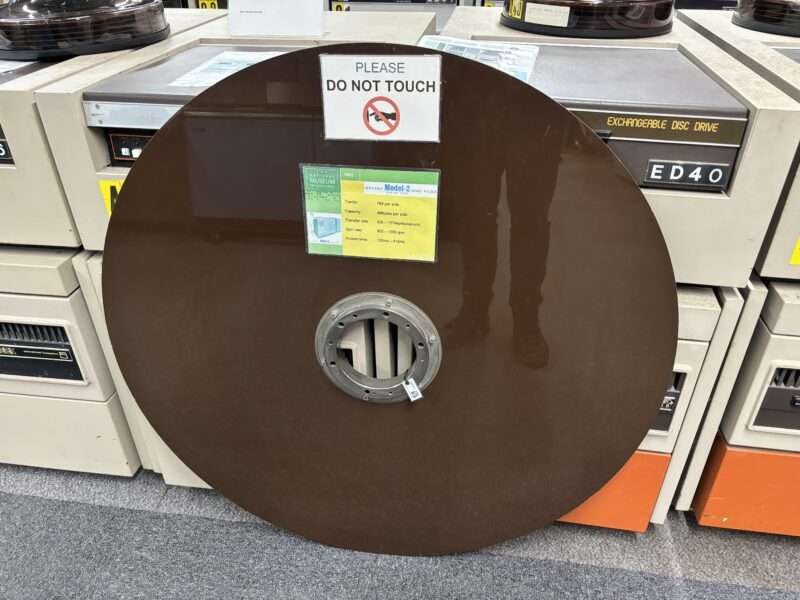
On display at the NMOC are mainframes from the fifties, right through to the eighties from large well-known companies like Tarmac, or the Nuclear Physics lab at Liverpool University. What you notice about them is how big they are – these computers filled rooms – yet they possess much less processing power than the modern mobile phone in your pocket.
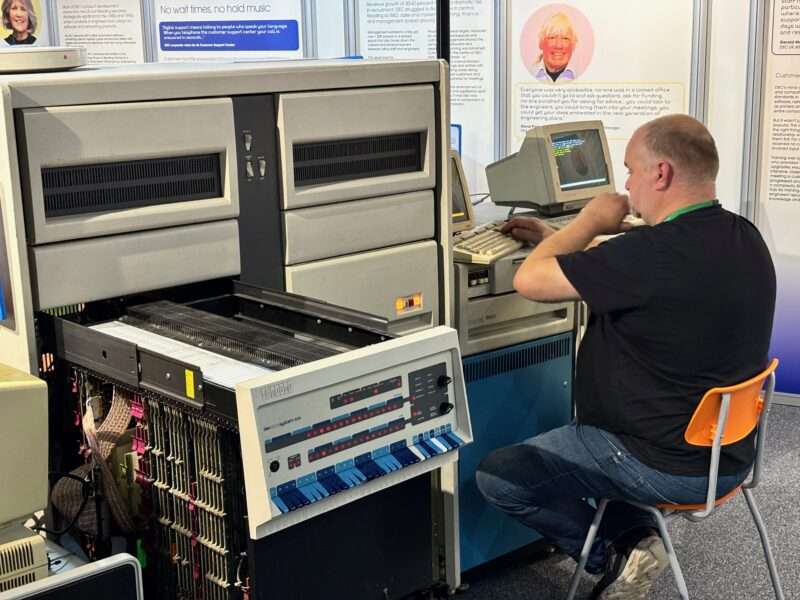


Advancements in technology lead to miniaturisation and rising processing power, which we’ve seen with our phones. But not everyone wants the power of a mainframe computer and there is a gallery devoted to the Digital Equipment Corporation (DEC). DEC pioneered the use of mini-computers, that could be used by smaller companies, or departments within larger organisations. Their famous product lines included the DEC PDP-8 and PDP-11, which sold in their thousands compared to mainframes that might sell in the low-hundreds.
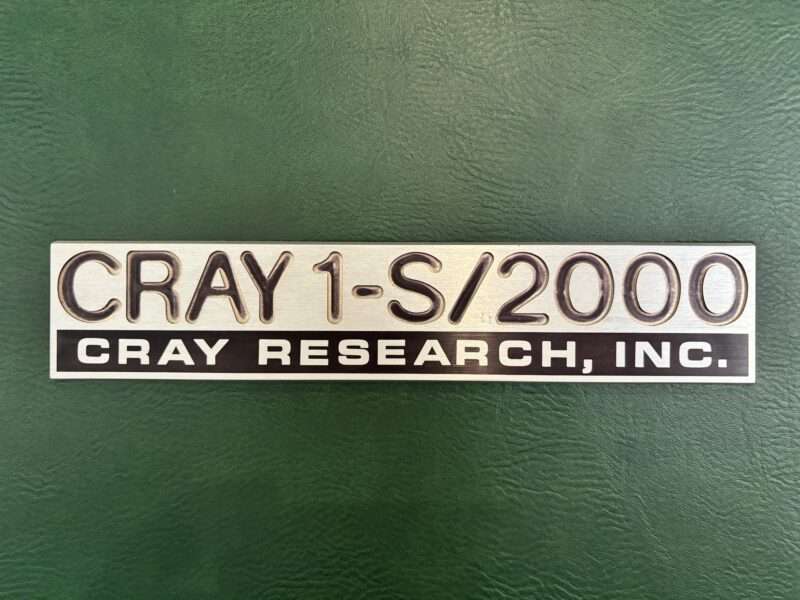
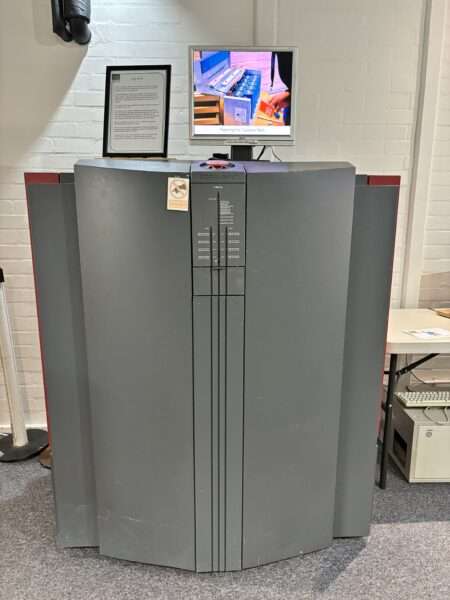
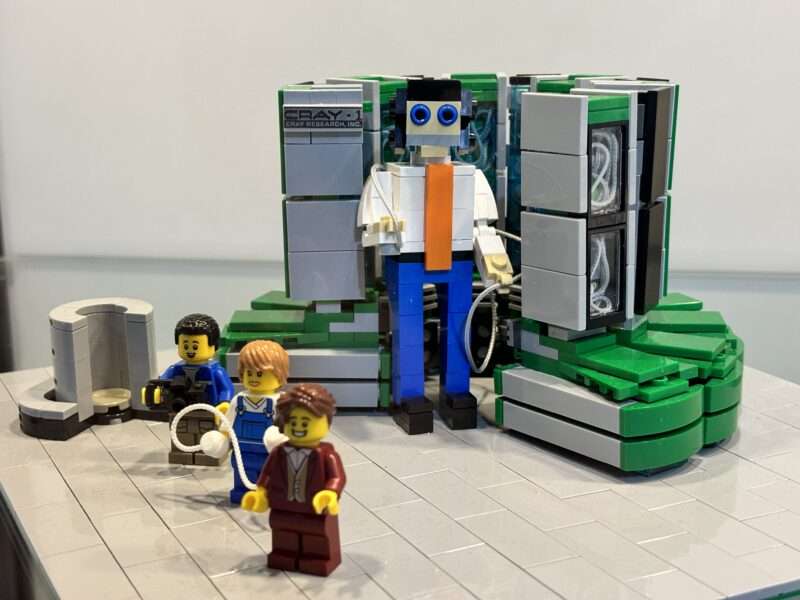
Of course, there is always the organisation that has a need for the biggest and most powerful computer. These organisations need to process vast amounts of data, and quick – speed is of the essence. Cray is probably the best known manufacturer of super computers and there is a Cray 1 on display at the museum and once belong to the Royal Aircraft Establishment at Farnborough. And those who say that there is no such thing as an attractive computer need to observe its sleek lines – it truly was a spectacular computer from any angle.
Another move in time brings us to the world of PCs, personal computers. These are the devices that we are all familiar with today; self contained devices that include all of the processing, storage, inputs (keyboard, mouse, etc.) and outputs (screen, speakers, etc.) on your desk, or laptop. It also encompasses tablets these days too. Computers are getting ever smaller, but ever more powerful, and they’re rendering mainframe and mini computers obsolete as PCs can be networked together and work together, sharing data and resources to perform tasks unimaginable a few short years ago.
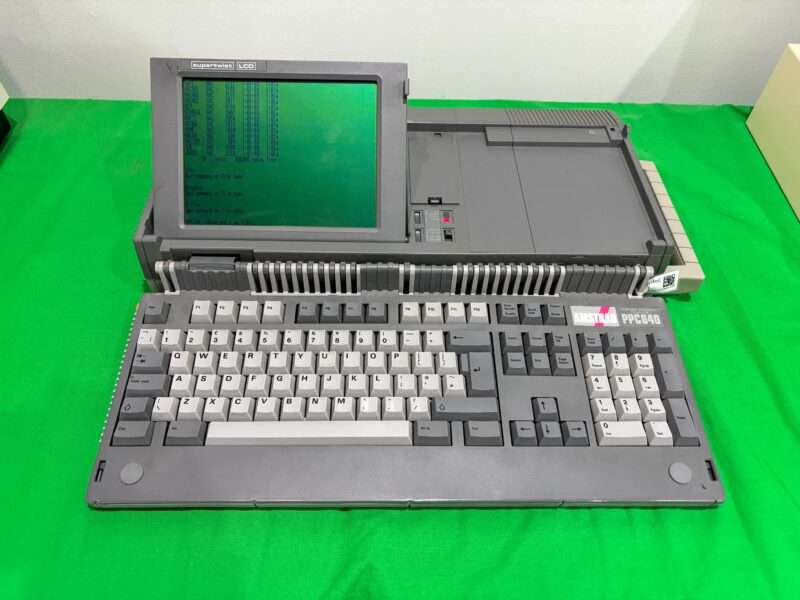
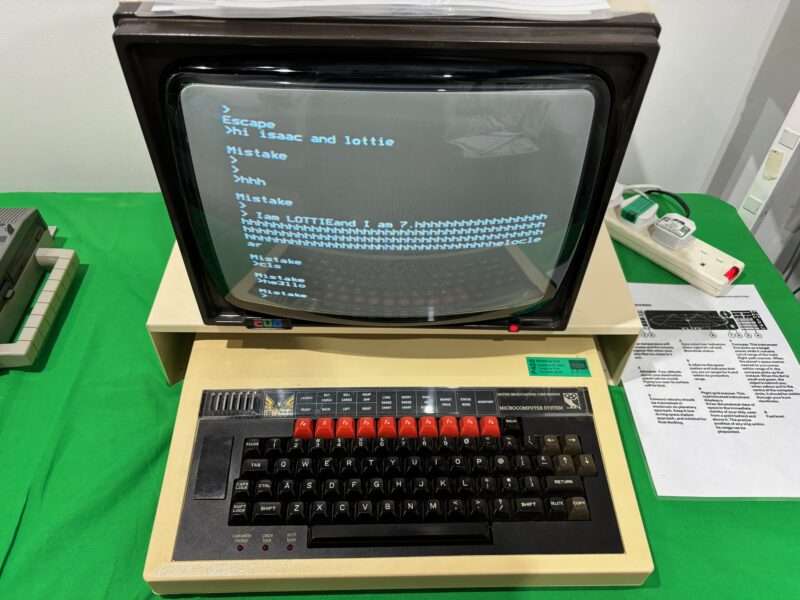
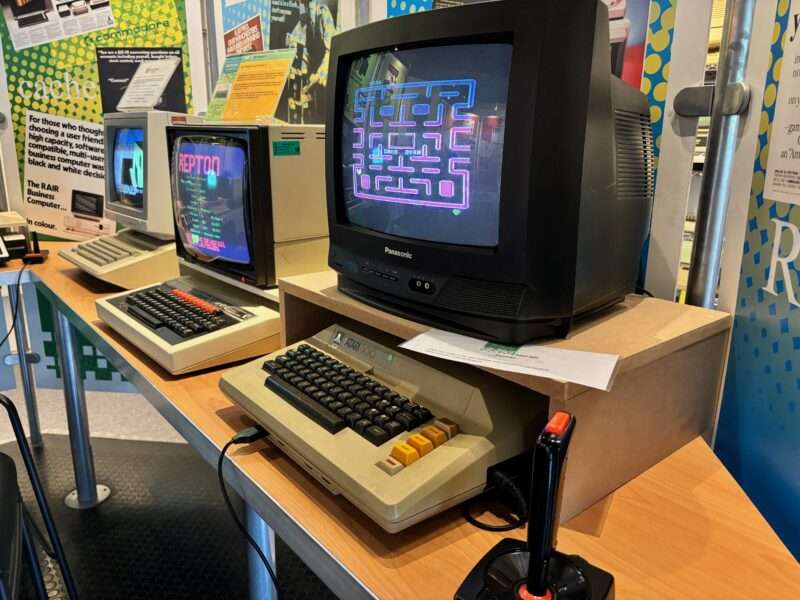
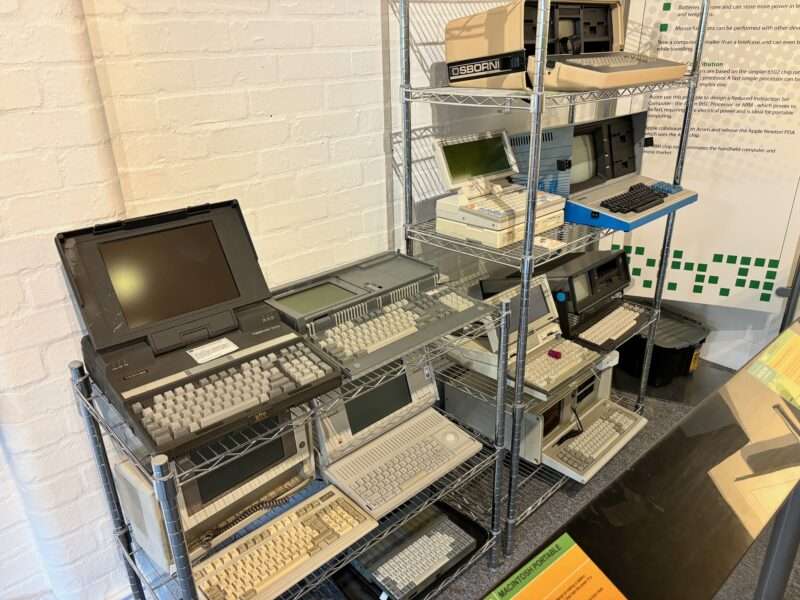


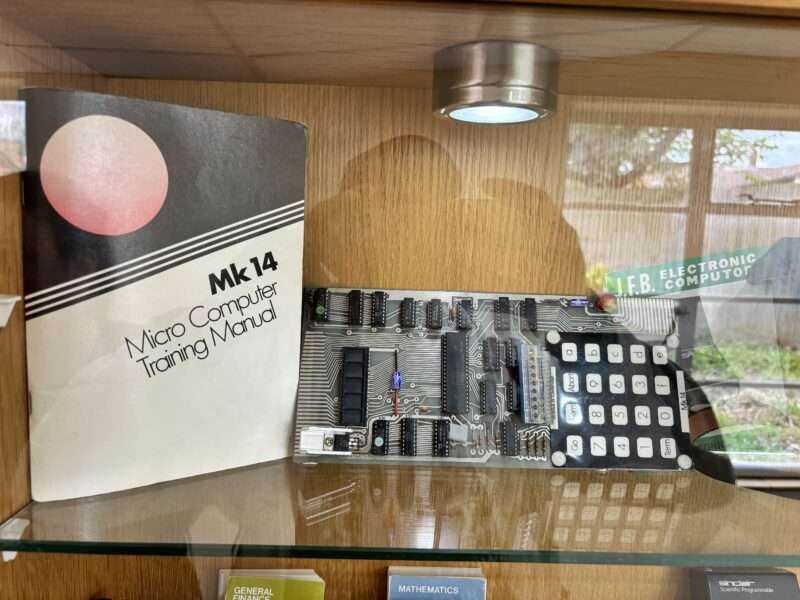
The National Museum of Computing houses a fine collection of personal computers from the 1980s onwards. Folk will remember many of these as home computers, but even an Apple ][ from the late 1970’s had similar processing power to the computer on-board the Apollo 14 mission, and that controlled a space craft.
Of course, there was the chorus from Quantum Technology Club members, as they looked at these icons, of, “had that”, “got that”, “wanted that”, “you made me get rid of that”, ….
To have a good look around both the Bletchley Park Museum and the National Museum of Computing properly we budgeted two whole days and that was just about right. We entered both museums shortly after opening time and departed not long before closing time on both days.
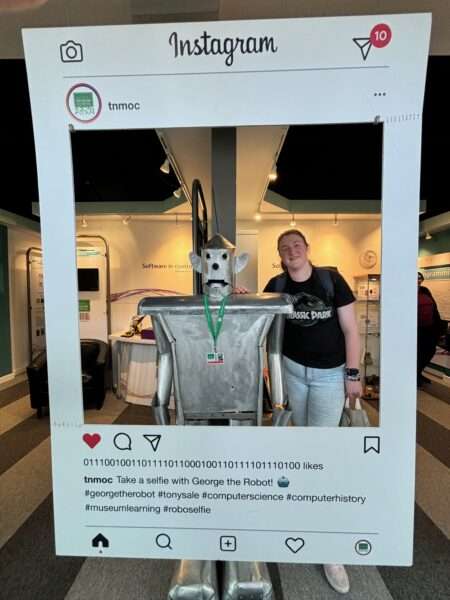
Much of the visit to the BP museum required walking around outside and the grounds and main house are a spectacle in their own right. The weather was kind, which helped enourmously.
On the Saturday evening we all enjoyed a meal together at a local pub before retiring to our various hotels and campsites.
Another great weekend away with friends – where are we going next year?